
Custom NFC, RFID and Smart Card Manufacturer
100M+ Cards Annually | Original NXP Chips | Since 2011


 2026.10.18


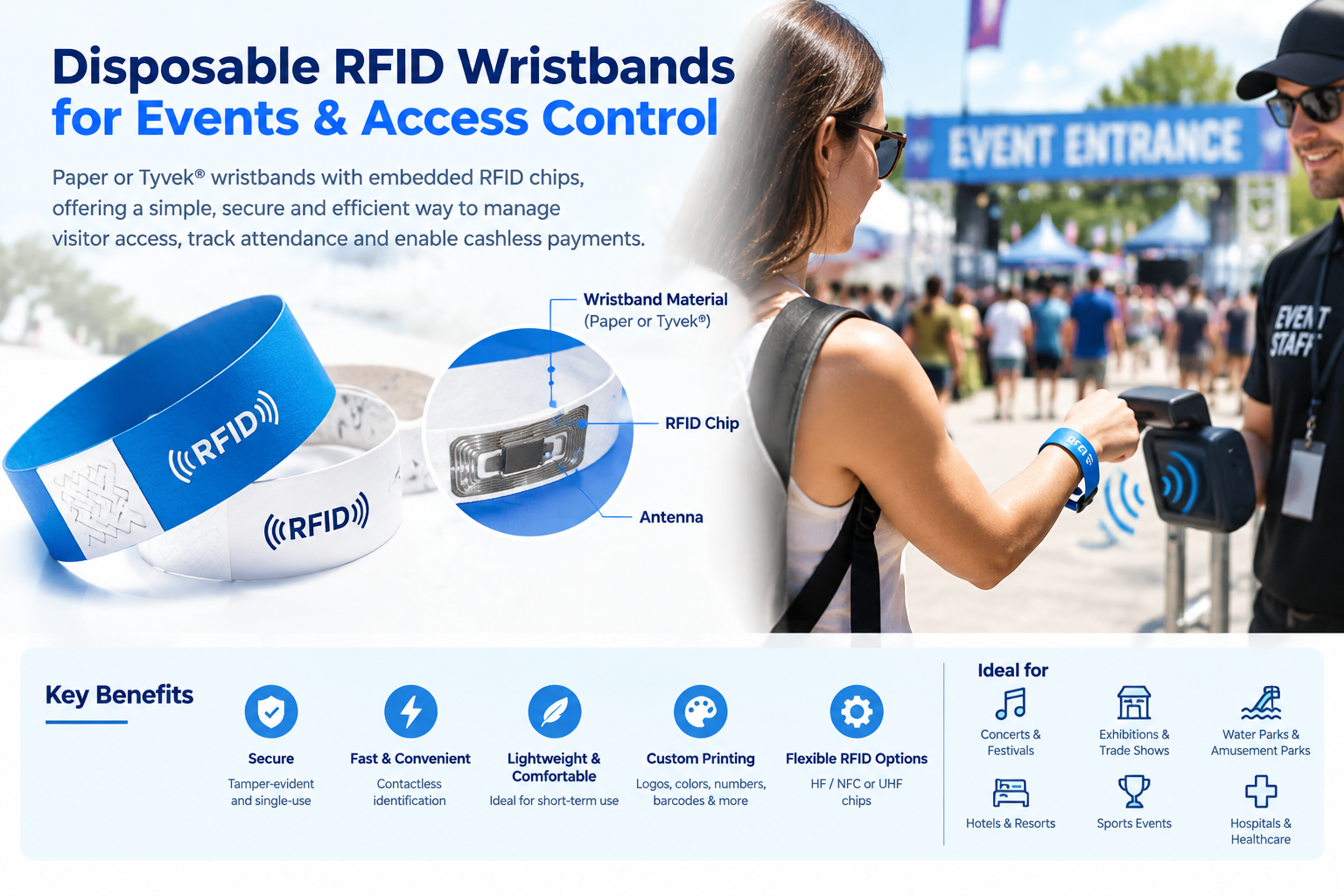
Disposable RFID wristbands are single-use identification bands that combine lightweight paper or Tyvek® material with embedded Radio Frequency Identification (RFID) technology. They are widely used for event access control, festivals, exhibitions, water parks, hotels, hospitals, and other environments where fast identification and efficient visitor management are essential.
Unlike traditional paper wristbands that rely on visual inspection, disposable RFID wristbands allow users to be identified electronically by an RFID reader. Depending on the RFID technology and system configuration, they can support contactless access control, visitor tracking, and cashless transaction applications.
For event organizers and businesses, disposable RFID wristbands offer a practical combination of convenience, cost efficiency, and controlled access.
Disposable RFID wristbands typically consist of three main components: an outer material, an RFID inlay, and a tamper-evident fastening system.
1. Paper or Tyvek® Material
Paper RFID wristbands are lightweight and suitable for short-term identification and event use. Tyvek® wristbands, made from high-density polyethylene fibers, offer a distinctive combination of lightweight construction, tear resistance, and water resistance.
Both options are suitable for single-use applications, although the best choice depends on the event environment, required durability, printing needs, and budget.
2. Embedded RFID Chip and Antenna
The RFID inlay contains a microchip and an antenna. The chip stores identification data, while the antenna enables communication with compatible RFID readers.
Depending on the intended application, disposable RFID wristbands can use different RFID technologies, including HF/NFC and UHF. The operating frequency, chip type, read range, and supported functions should be selected according to the requirements of the RFID system.
3. Tamper-Evident Closure
A disposable wristband typically features an adhesive closure or another single-use fastening mechanism. Once secured around the wrist, it helps prevent unauthorized transfer between users.
The closure design and tamper resistance vary by product, so buyers should verify the construction before placing an order.
Disposable RFID wristbands use radio waves to exchange data with compatible RFID readers. A typical process involves four steps.
Step 1: The Wristband Is Issued
Each visitor receives a wristband containing an RFID chip. The chip can be associated with a unique identifier in the event or venue management system.
Step 2: The RFID Reader Detects the Wristband
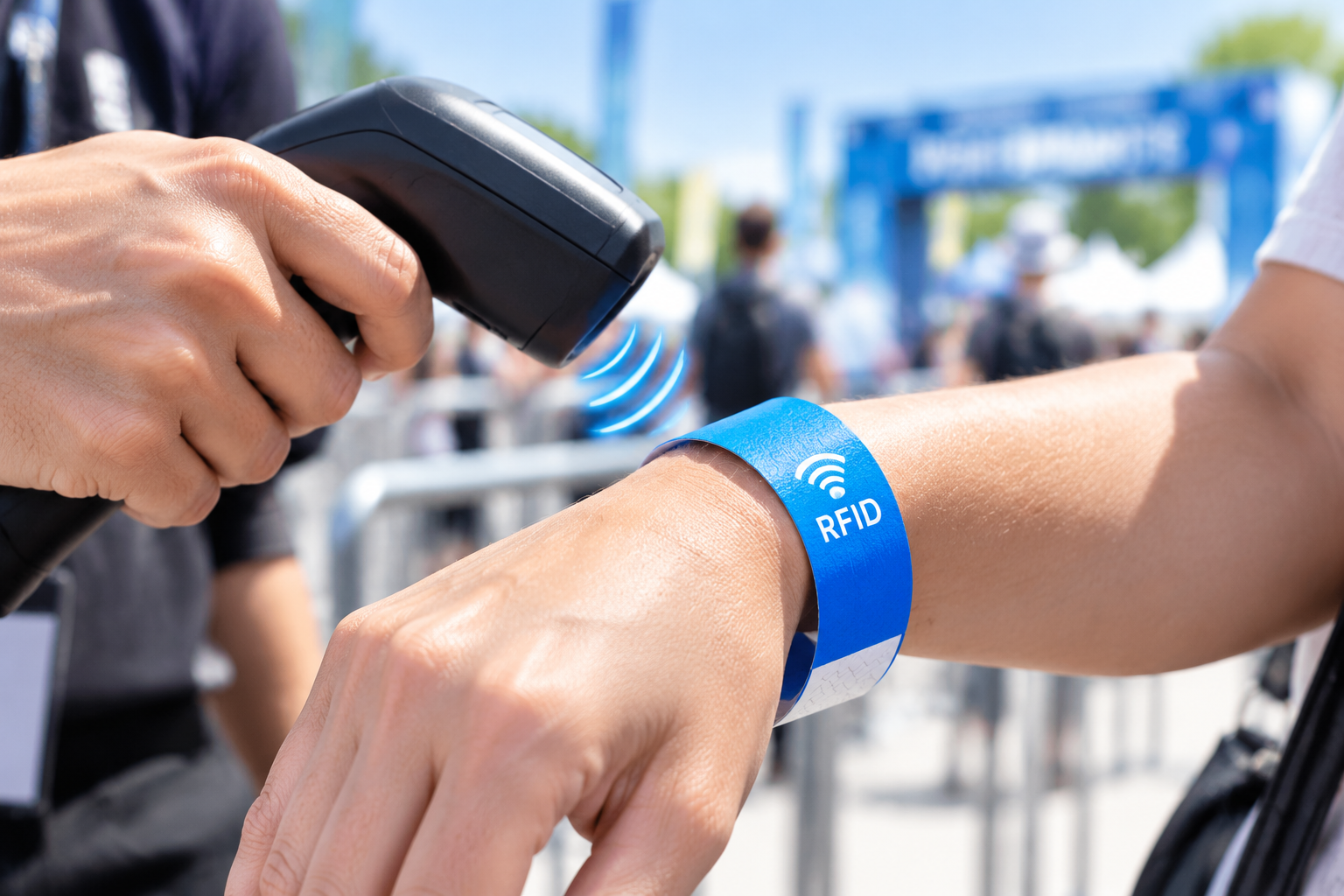
When the visitor approaches a compatible reader, the reader communicates with the wristband using radio-frequency signals. Depending on the technology, the reader may need the wristband to be brought close to it, or it may detect the wristband from a greater distance.
Step 3: The System Verifies the Data
The reader sends the captured identifier to the connected software system. The system checks the associated permissions, ticket status, or other relevant records.
Step 4: Access or Another Authorized Action Is Completed
If the visitor meets the configured requirements, the system can grant access, record attendance, or initiate another supported action. For example, a compatible closed-loop payment system may associate the wristband with a prepaid balance or visitor account.
The actual functions depend on the chip, reader, software, and system integration. An RFID wristband alone does not automatically provide payment processing or secure access control.
1. Cost-Effective for Large Events
Paper and Tyvek® wristbands are lightweight and suitable for high-volume distribution. They provide a practical option for festivals, concerts, exhibitions, and other events that require large quantities of single-use identification bands.
2. Fast and Convenient Identification
RFID technology reduces the need for staff to inspect tickets or manually enter identification details at every checkpoint. Depending on the system, it can help improve entry throughput and reduce queues.
3. Single-Use Access Control
A tamper-evident closure helps discourage wristband sharing and unauthorized transfer. When integrated with an appropriate access management system, each wristband can be linked to specific admission rights or visitor permissions.
4. Lightweight and Comfortable to Wear
Paper and Tyvek® wristbands are designed for lightweight, temporary wear. Their slim construction makes them convenient for visitors attending events, recreational venues, and short-term activities.
5. Custom Printing and Branding
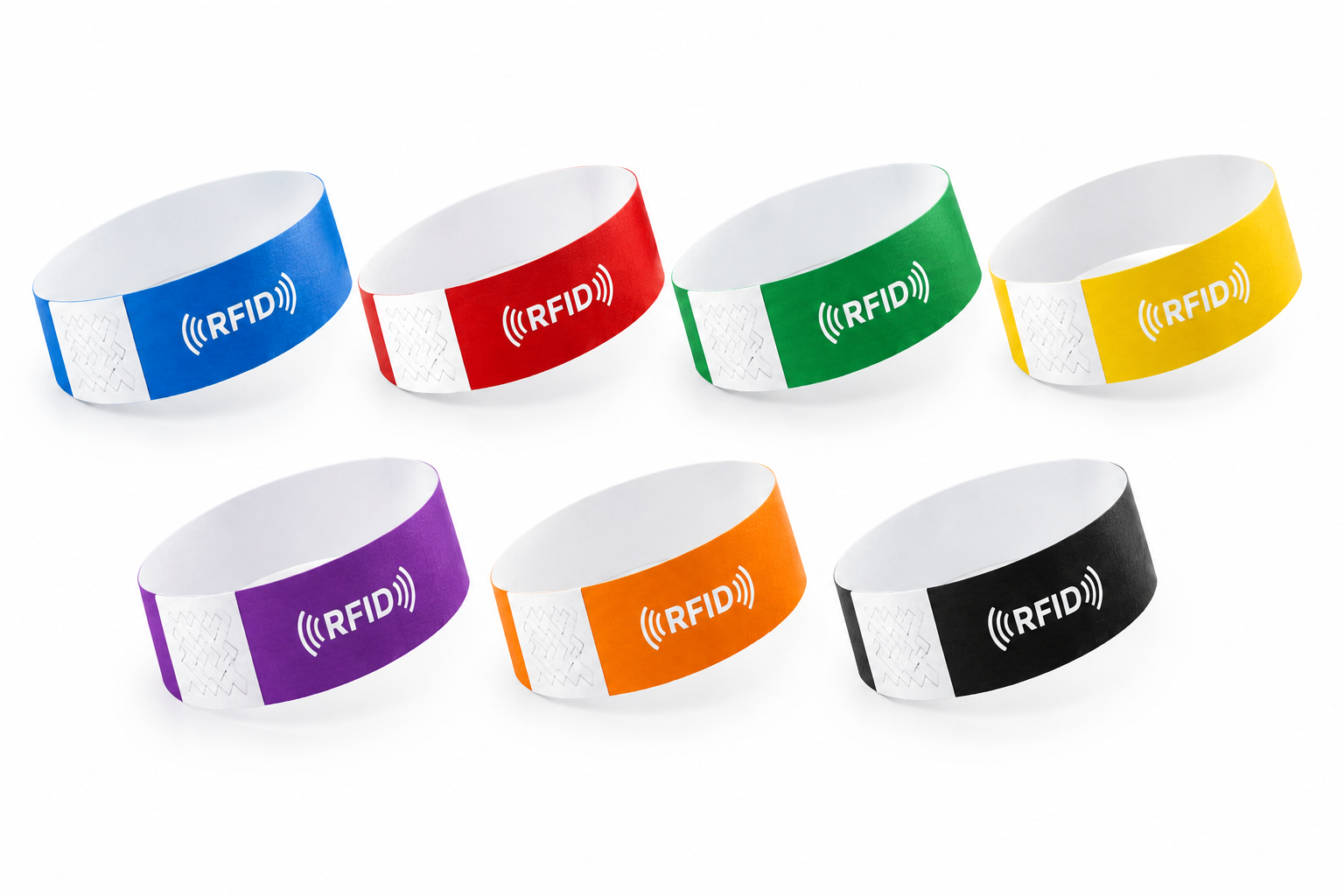
Disposable RFID wristbands can be customized with logos, event names, serial numbers, colors, barcodes, or QR codes, subject to the product design and printing requirements. Customization helps organizers distinguish visitor categories and reinforce event branding.
6. More Efficient Visitor Management
When connected to suitable software, RFID wristbands can help record entries, manage designated zones, and collect attendance data. Organizers can use this information to improve operational planning and understand visitor movement within the system's coverage.
Disposable RFID wristbands are suitable for a wide range of short-term identification applications.
Concerts and Music Festivals: Manage admission, VIP areas, and designated access zones.
Exhibitions and Trade Shows: Identify registered visitors and support streamlined entry.
Water Parks and Amusement Parks: Provide visitor identification and support compatible cashless systems.
Hotels and Resorts: Support temporary guest identification and compatible access systems.
Sports Events: Help manage spectator entry and authorized areas.
Hospitals and Healthcare Facilities: Support selected patient or visitor identification workflows when the product and system meet the facility's requirements.
Corporate and Private Events: Simplify guest registration and access management.
The most suitable RFID frequency and wristband construction depend on the environment, reader infrastructure, and intended use.
Choosing the right material is important when selecting disposable RFID wristbands for an event or business.
| Feature | Paper RFID Wristbands | Tyvek® RFID Wristbands |
|---|---|---|
| Construction | Paper-based material | High-density polyethylene fiber material |
| Weight | Lightweight | Lightweight |
| Tear resistance | Depends on paper construction | Generally offers good tear resistance |
| Water resistance | Depends on material and coating | Generally water-resistant |
| Custom printing | Available, depending on design | Available, depending on design |
| Typical use | Short-term identification and indoor events | Festivals, outdoor events, and short-term visitor identification |
| RFID integration | Depends on product design | Depends on product design |
Both materials can be used for disposable RFID wristbands. Buyers should evaluate the material, adhesive closure, RFID performance, printing requirements, and expected wearing conditions before selecting a product.
Before purchasing disposable RFID wristbands, consider the following factors:
RFID Frequency and Chip Type: Determine whether your application requires HF/NFC or UHF technology. Check compatibility with your existing readers and software.
Read Range: Define the required reading distance and throughput. Actual performance depends on the chip, antenna design, reader, installation, and surrounding environment.
Material and Durability: Choose paper or Tyvek® according to the expected wearing period, moisture exposure, and risk of tearing.
Security Requirements: Consider tamper-evident closures, unique identifiers, access permissions, and the security features supported by the selected chip and system.
Customization: Confirm your requirements for logos, colors, variable data, numbering, barcodes, and QR codes.
System Compatibility: Verify that the wristband works with your ticketing, access control, visitor management, or payment infrastructure.
Order Quantity and Lead Time: For large events, confirm production capacity, sample availability, customization details, and delivery schedules in advance.
Disposable RFID wristbands combine the convenience of single-use identification with the efficiency of contactless RFID technology. Available in paper and Tyvek® constructions, they offer a practical solution for events, exhibitions, entertainment venues, and other applications that require temporary identification and streamlined access management.
Selecting the right wristband involves more than choosing a material. RFID frequency, chip type, antenna design, closure construction, customization, and system compatibility all influence the final product's suitability.
If you are sourcing disposable RFID wristbands for your next event or project, compare the available material and RFID options to find a solution that meets your operational requirements.
Looking for custom disposable RFID wristbands?
Discuss your required material, RFID technology, chip type, printing design, and order quantity with a qualified RFID wristband manufacturer to identify the right solution for your application.