Custom NFC, RFID and Smart Card Manufacturer
100M+ Cards Annually | Original NXP Chips | Since 2011


 2026.10.09


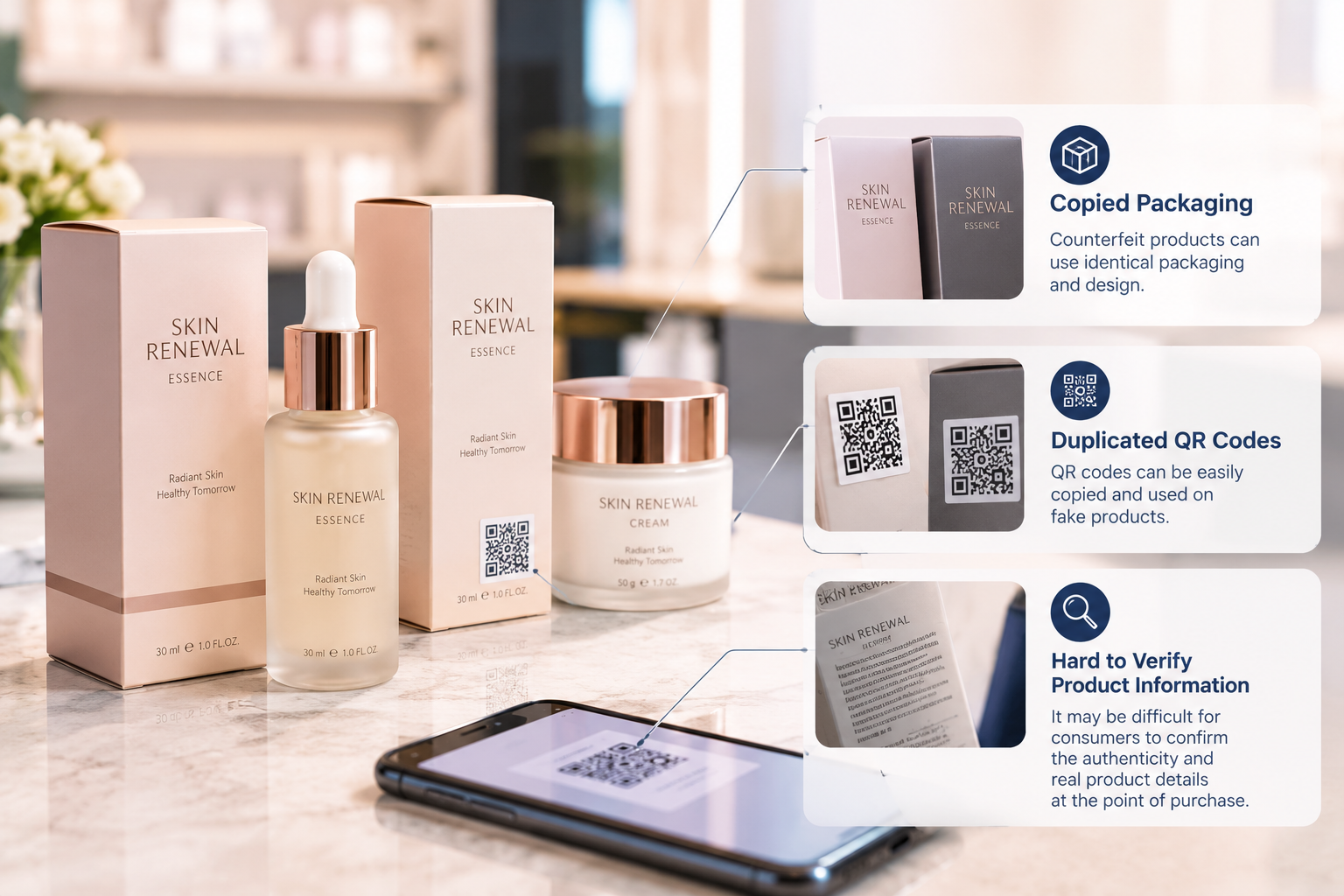
Counterfeit cosmetics and personal care products create challenges for brand owners, distributors, and consumers. Packaging can be copied, printed QR codes can be duplicated, and product information may be difficult to verify at the point of purchase.
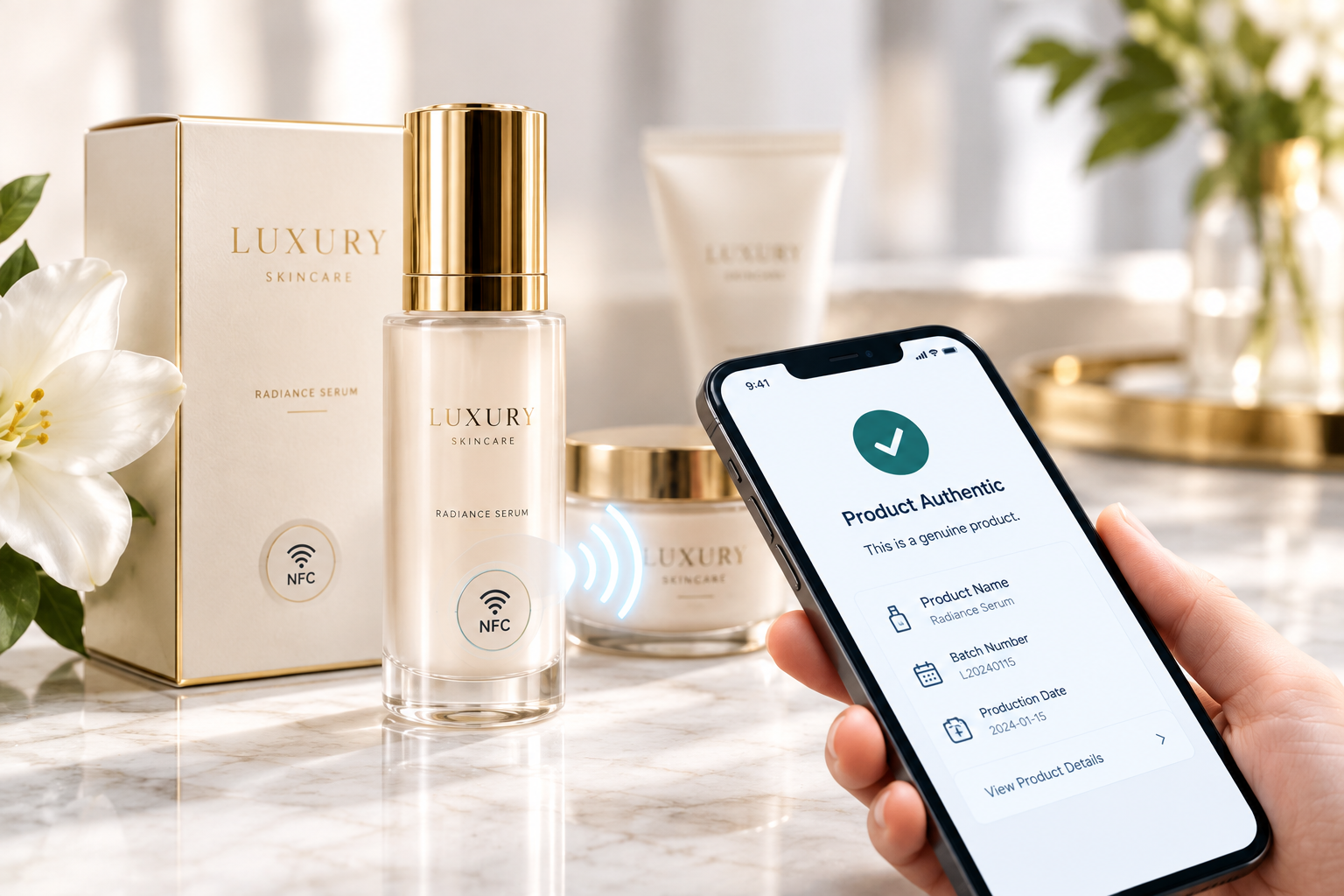
Secure NFC tags provide another way to connect a physical product with its digital identity. By embedding an NFC inlay or label into cosmetic packaging, brands can allow consumers to tap the product with a compatible smartphone and access an online product verification experience.
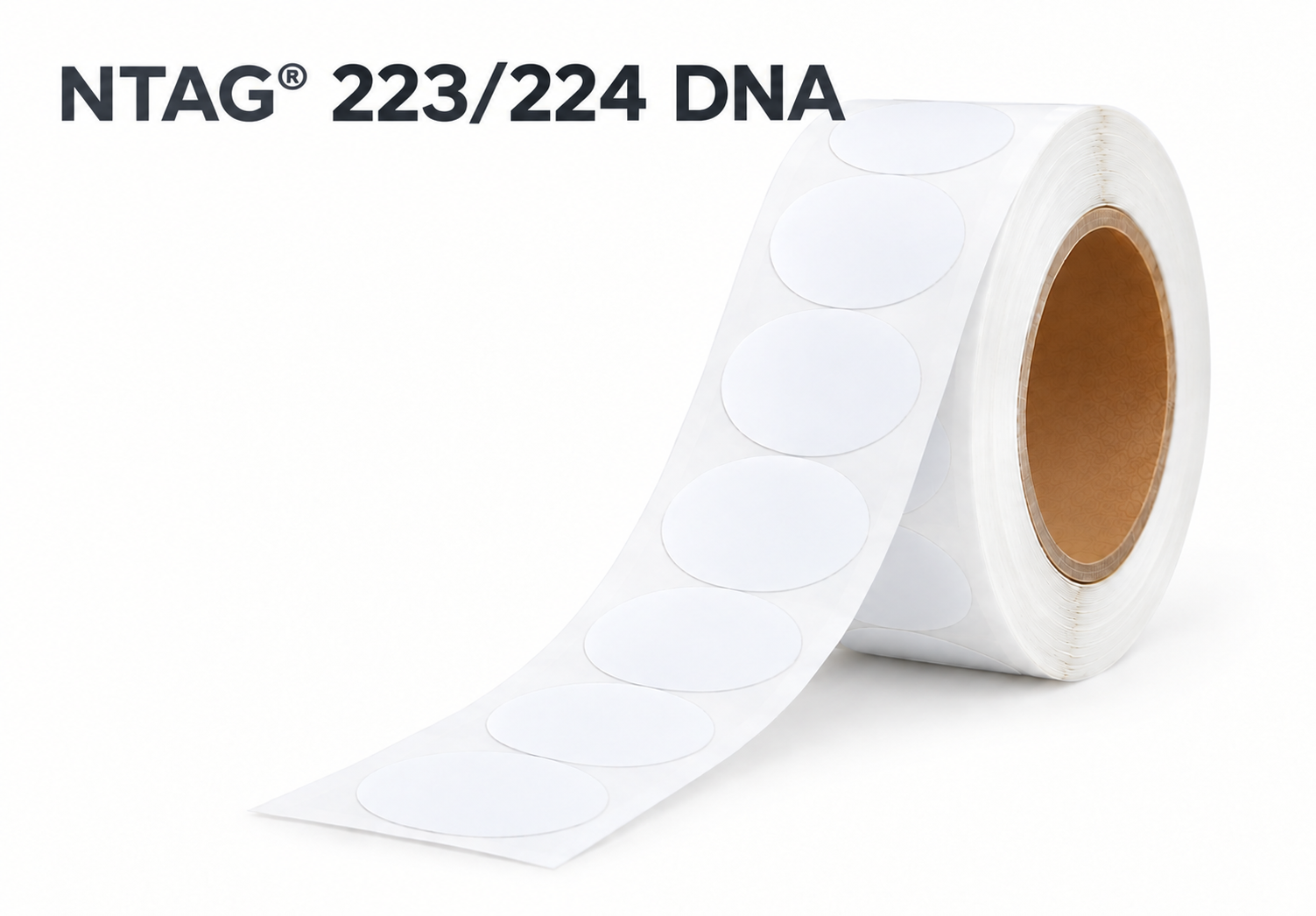
NXP NTAG 223 DNA and NTAG 224 DNA are secure NFC integrated circuits designed for applications that require product authentication and data protection. Both support Secure Unique NFC (SUN) message authentication using AES-128 cryptography. NTAG 223 DNA provides 144 bytes of user memory, while NTAG 224 DNA provides 208 bytes.
The Application Challenge
A cosmetics brand may need to protect products such as skincare serums, premium creams, fragrances, and high-value beauty gift sets.
Common challenges include:
Consumers need a convenient way to access product information.
Brand owners need a way to distinguish legitimate product interactions from copied tag data.
Distributors need consistent product identification across markets.
Marketing teams want to connect physical packaging with digital product pages and after-sales services.
A standard NFC tag can link to a website, but a static URL alone does not establish that the physical product is genuine. A more secure design combines a protected NFC chip, cryptographic verification, and a backend service.
Proposed Solution: Secure NFC Cosmetic Labels
A secure NFC label can be integrated into a product label, outer carton, tamper-evident seal, or other suitable packaging component.
The proposed workflow is:
Assign a product identity. Each tag is provisioned with the required security configuration and associated with a product record.
Apply the NFC label. The tag is incorporated into the packaging during production.
Let the consumer tap. A compatible NFC smartphone reads the tag.
Verify the response. The application or online service validates the cryptographic message and checks the associated product record.
Display relevant information. Depending on the brand's system, the consumer may see product details, batch information, authenticity status, or care instructions.
The verification service is essential. A chip provides security functions, but the overall anti-counterfeiting result depends on secure provisioning, key management, server-side verification, and how the product identity is managed.
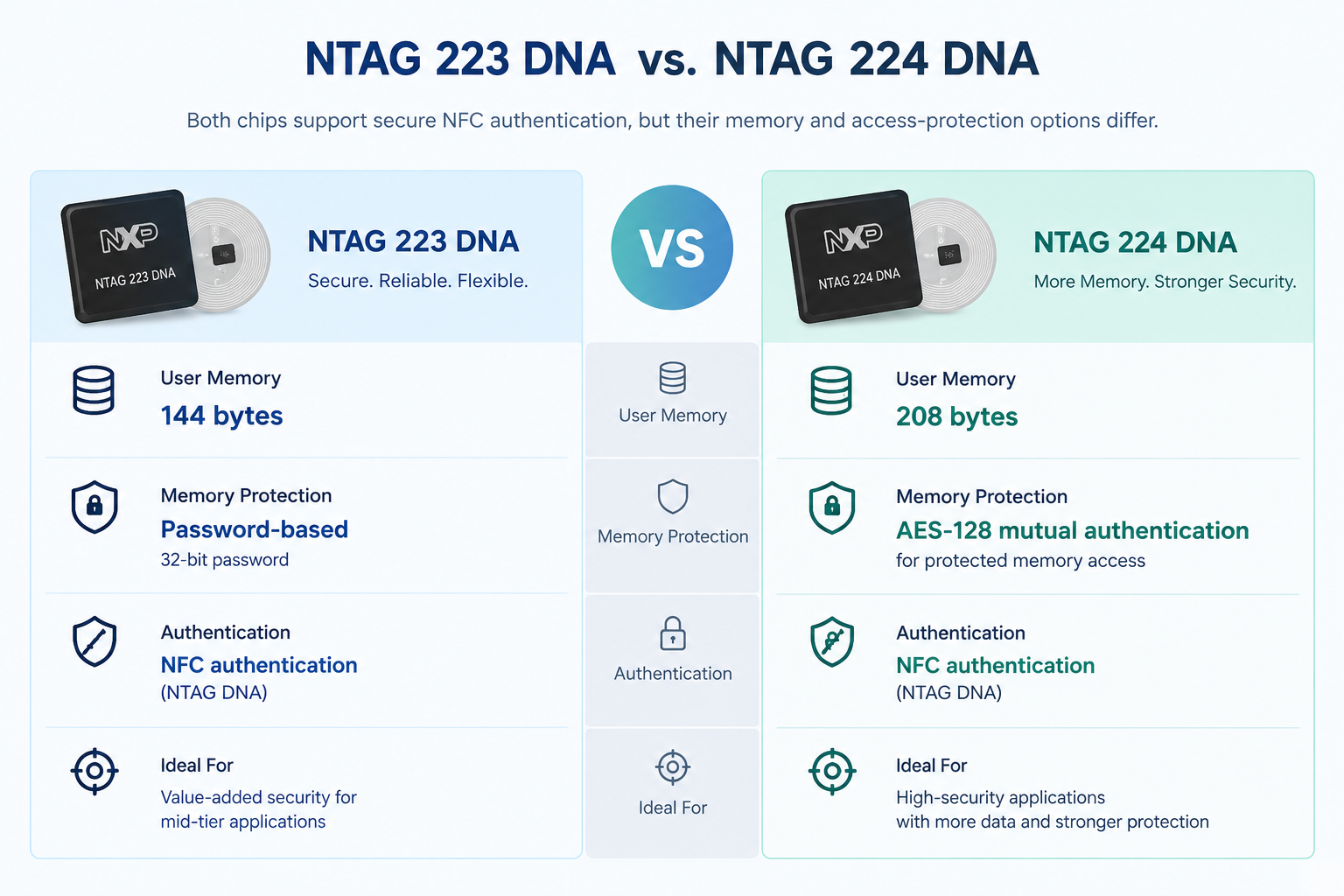
NTAG 223 DNA vs. NTAG 224 DNA
Both chips support secure NFC authentication, but their memory and access-protection options differ.
NTAG 223 DNA: 144 bytes of user memory and password-based memory protection using a 32-bit password.
NTAG 224 DNA: 208 bytes of user memory and AES-128 mutual authentication for protected memory access.
Both support AES-128-protected SUN message authentication. NTAG 224 DNA may be a suitable candidate when the system requires AES-128 mutual authentication for memory access. The final selection should follow a review of the security architecture and implementation requirements.
Recommended Product Formats
Depending on the packaging design, the chip can be integrated into:
Custom NFC stickers for cosmetic cartons
NFC labels for premium skincare products
Tamper-evident NFC seals
NFC-enabled product cards included in gift sets
A suitable antenna and tag construction must be selected for the available space and the materials surrounding the NFC inlay. Metal packaging, foil, and some product formulations can affect read performance and should be tested.
What Buyers Should Verify Before Ordering
Before selecting an NFC tag supplier, buyers should confirm:
The exact chip model and chip authenticity
Antenna dimensions and read performance on the finished package
Security configuration and personalization requirements
Compatibility with the intended smartphones and verification platform
Label adhesive, printing, and environmental requirements
Encoding, quality control, and traceability procedures
NTAG 223 DNA and NTAG 224 DNA can support secure NFC authentication solutions for cosmetics and personal care products. The right choice depends on memory requirements, access protection, packaging constraints, and the brand's verification infrastructure.
For brand owners evaluating custom NFC tags, the most important step is to validate the complete solution—not just the chip—on the final product packaging.
Union Smart can support project evaluation for custom NFC cards, labels, and tags based on the selected chip, antenna design, material, and encoding requirements. Contact our team to discuss your application.
Frequently Asked Questions
Can NFC tags help prevent counterfeit cosmetics?
They can support product authentication by combining cryptographic tag verification with a backend product record. No single tag eliminates every form of counterfeiting.
What is the difference between NTAG 223 DNA and NTAG 224 DNA?
NTAG 223 DNA has 144 bytes of user memory and 32-bit password-based memory protection. NTAG 224 DNA has 208 bytes and supports AES-128 mutual authentication for protected memory access.
Can consumers scan secure NFC cosmetic labels with smartphones?
Compatible NFC smartphones can read the tags. The verification experience depends on tag configuration, phone compatibility, and the software or web service used.
Does a secure NFC chip automatically prove that a product is genuine?
No. Secure authentication must be correctly configured and validated by an appropriate system. Product registration, backend verification, and deployment controls are also important.