Custom NFC, RFID and Smart Card Manufacturer
100M+ Cards Annually | Original NXP Chips | Since 2011


 2026.05.26


RFID (Radio Frequency Identification) technology is becoming a critical tool in the premium wine industry to combat counterfeiting and achieve supply chain transparency. It addresses the major flaws of traditional anti-counterfeiting methods (which are often easy to copy and difficult to verify) by giving every bottle a unique "digital ID." This enables lifecycle management from production to consumer consumption.
For one Bordeaux client, the switch to RFID was immediate: within 6 months of implementation, distributor audits showed counterfeit versions of their Grand Cru had nearly disappeared from the Hong Kong gray market.
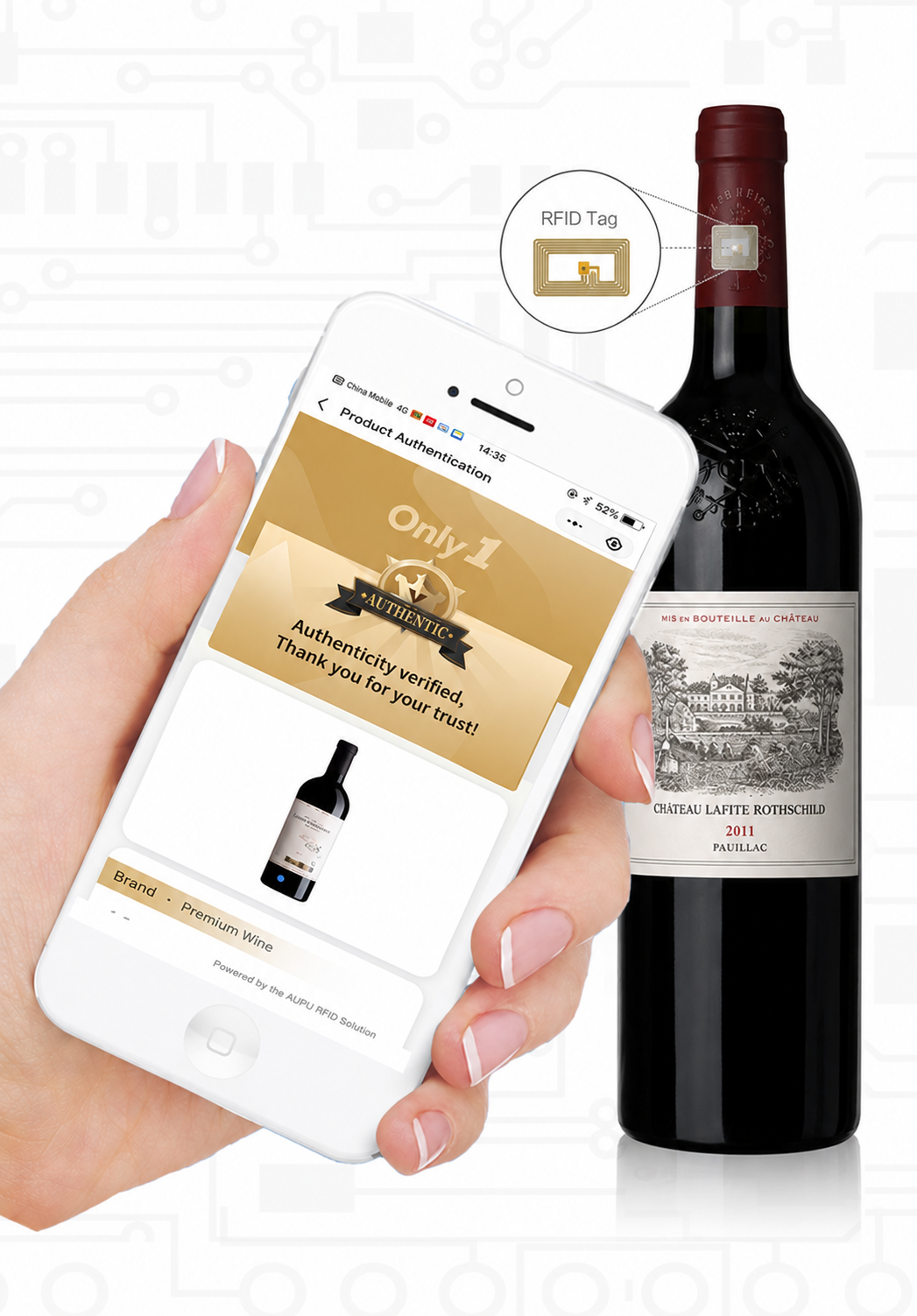
The core anti-counterfeiting logic is three-dimensional, not just a single physical mark.
Uniqueness & Chip Encryption:
Each RFID tag contains a globally unique ID number, written into the chip during manufacturing. This number cannot be copied or altered. Advanced chips like the NXP NTAG 424 DNA use bank-grade encryption to prevent data cloning.
Physical Destruction (Tamper-Evident Design):
To prevent old tags from being removed and stuck onto fake bottles, RFID tags use a single-use destruction design:
Cap Seal: The tag bridges the bottle cap and the bottle body. Opening the bottle breaks the antenna, instantly deactivating the tag.
Tamper-Evident Adhesive: Some tags (like the Checkpoint Eyewall Tamper) use special glue. If someone tries to peel off the tag, the base material breaks apart or reveals a "VOID" message.
"Three-Code Unification" :
High-end applications link the RFID chip code, a laser-etched code on the bottle, and a bridging code. A counterfeiter would find it extremely difficult to replicate three different encoding processes simultaneously.
Wine is a liquid, and liquids (especially water and alcohol) severely interfere with radio frequency signals. This was the biggest obstacle to using RFID on wine bottles.
The Solution:
Specifically designed BottleID solutions exist. These tags feature specially tuned antenna frequencies and materials to compensate for signal attenuation caused by the liquid, allowing stable reading/writing on full glass bottles.
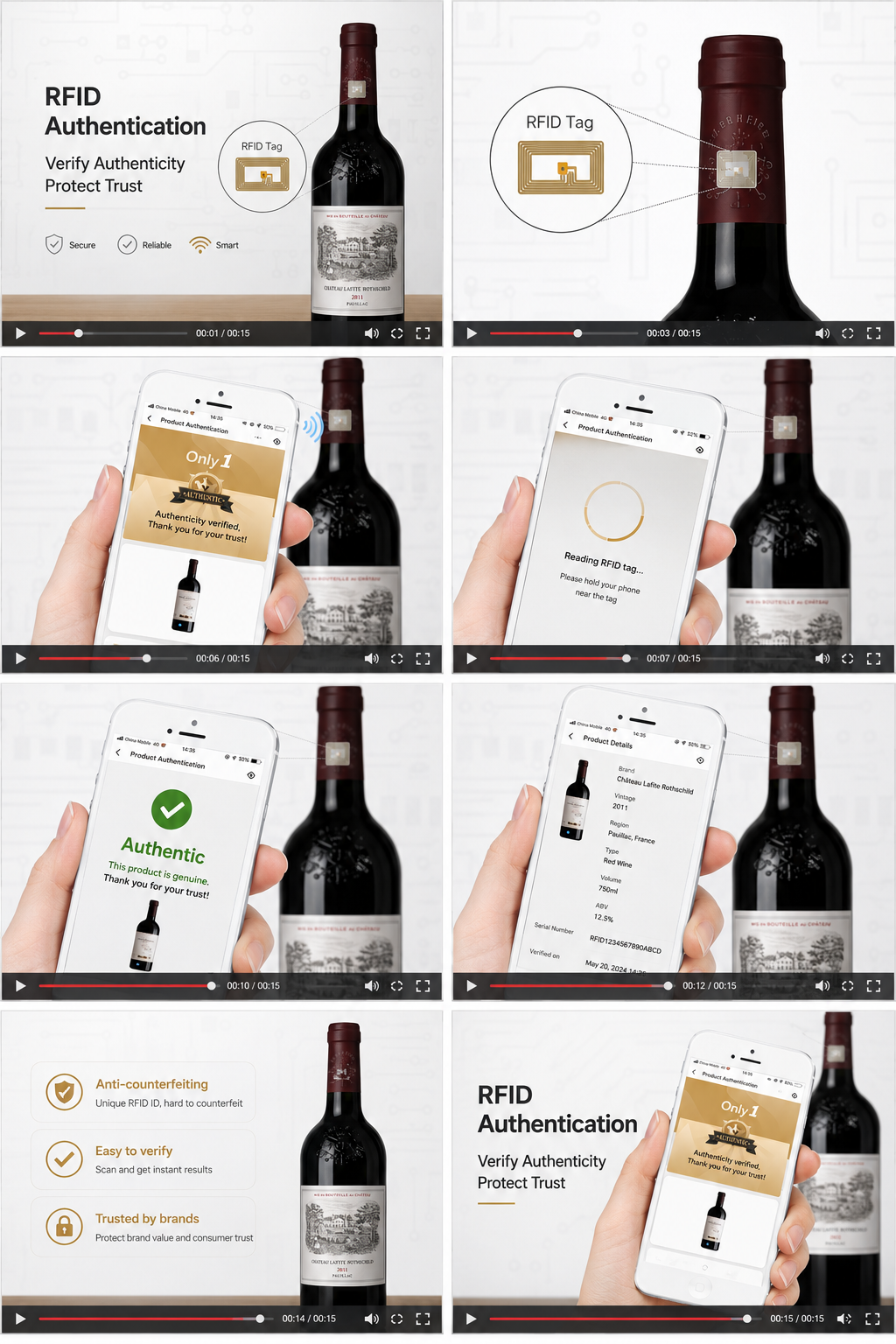
RFID application goes beyond just sticking a label on a bottle. Several innovative integration methods are used:
| Application Form | Technical Implementation | Core Value |
| Punt (Bottom) Tag | Rigid RFID tag embedded in the bottom punt of the bottle. | Highly covert, strong tamper resistance. |
| Cap / Cork Integration | Chip embedded in the cork or tag placed under the capsule. | Physically broken upon opening, ensuring packaging integrity. |
| NFC Smart Label | High-Frequency (HF) NFC tag. | Consumers can tap their smartphone to verify authenticity instantly, no special reader needed. |
| Neck / Back Label | Transparent or custom-printed RFID inlay. | Integrated within the wine label design, preserving aesthetics while adding functionality. |
Today's best protection isn't just a single tag; it combines lab analysis with blockchain:
"Content + Packaging" Dual Authentication:
A solution demonstrated at a 2024 Swiss auction for ultra-high-end wines (like Domaine de la Romanée-Conti) shows the highest standard. The process: a device takes a micro-sample of the wine, analyzes its chemical composition against a database of 1,400+ vintage profiles. Once confirmed authentic, a tamper-evident RFID seal is applied to the bottle, and all verification data is written to a blockchain. This guarantees not just the bottle but the liquid inside is genuine.
Cutting-Edge Research (Graphene Chipless Tag):
Recent research explores creating laser-induced graphene chipless RFID tags directly on cork stoppers. This uses the cork's own carbon to form a conductive circuit. The physical structure is extremely difficult to replicate, offering a potential future solution that is both greener and harder to forge.
Beyond anti-counterfeiting, RFID offers significant operational benefits:
Precise Channel Management (Anti-Diversion) : The system automatically records if a bottle is sent to Beijing or Shanghai. If a product intended for Beijing is scanned in a store in Shanghai, the system alerts the brand owner, effectively combating market diversion (gray market).
Smart Inventory Management : Staff can use a handheld reader to scan an entire wall of wine in seconds, without touching a single bottle, automatically identifying stock levels and locations.
Enhanced Consumer Engagement : A customer tapping a bottle with their phone not only verifies its authenticity but can also access information like the grape harvest year, type of oak barrel used for aging, winemaker's notes, and food pairing suggestions.
RFID anti-counterfeiting in the wine industry has evolved from a simple barcode replacement into a comprehensive ecosystem combining physical tamper-proofing, digital encryption, cloud-based verification, and blockchain traceability. For premium and fine wine, it has become essential infrastructure for protecting brand value and building consumer trust.