Custom NFC, RFID and Smart Card Manufacturer
100M+ Cards Annually | Original NXP Chips | Since 2011


 2026.06.09



Client: 2025 Shenzhen Nanshan Half Marathon Organizing Committee
Problem: With 20,000 runners, finish line timing was chaotic. Participants had to wait 4 hours to get their official net time.
Solution: Embedded passive UHF RFID tags into each runner's bib, and installed 3 automatic (reader mats) along the course.
Result: Runners get their net time within 5 minutes of finishing. Manual timing labor reduced by 70%. Timing accuracy reached 99.9%.
If you participated in a marathon ten years ago, chances are your race timing depended heavily on manual recording and post-event data processing.
Today, things look very different.
From city marathons and triathlons to music festivals and large-scale sporting events, RFID technology has quietly become one of the most important tools behind modern event operations.
For event organizers, growth creates new operational challenges.
A local race with 500 runners can often be managed manually.
One of our clients, a provincial capital marathon, used to need 40 manual timekeepers. The error rate was as high as 8%.
The same challenge exists in music festivals and sporting venues. Organizers need to process thousands of attendees within a short period while maintaining security, accuracy, and a positive guest experience.
RFID Is No Longer an Experimental Technology
Many people still view RFID as an emerging technology.
In reality, RFID has already become a mature solution in event management.
Race timing systems based on passive UHF RFID tags are now widely used in marathons around the world. Participants simply wear a timing chip attached to their bib, while RFID readers installed along the course automatically capture timing data.
After adopting our RFID solution, the event achieved 99.9% timing accuracy for all 20,000 runners. Post-race complaints about timing dropped by 85% year-over-year.
Beyond Timing: Creating a Better Event Experience
The role of RFID has expanded far beyond race timing.
Today, RFID wristbands can be used for:
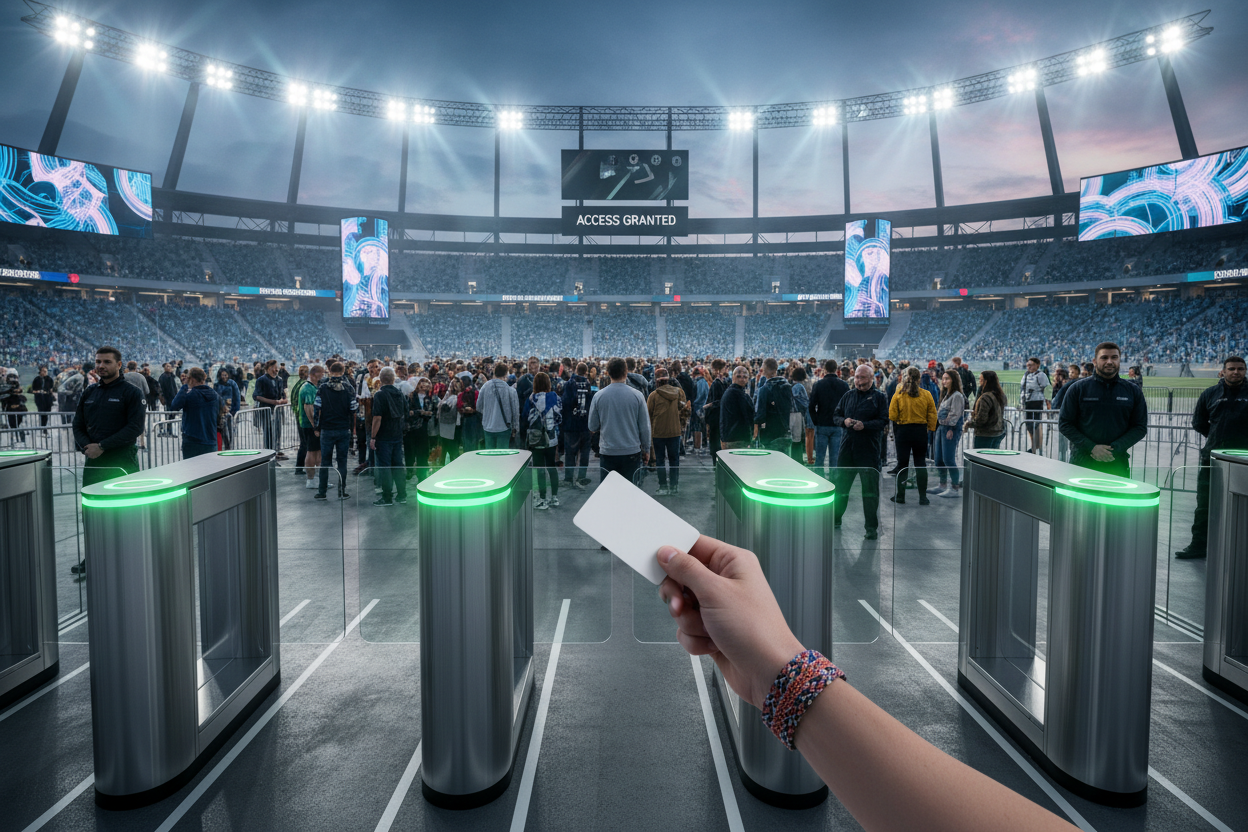
Event access control
VIP zone management
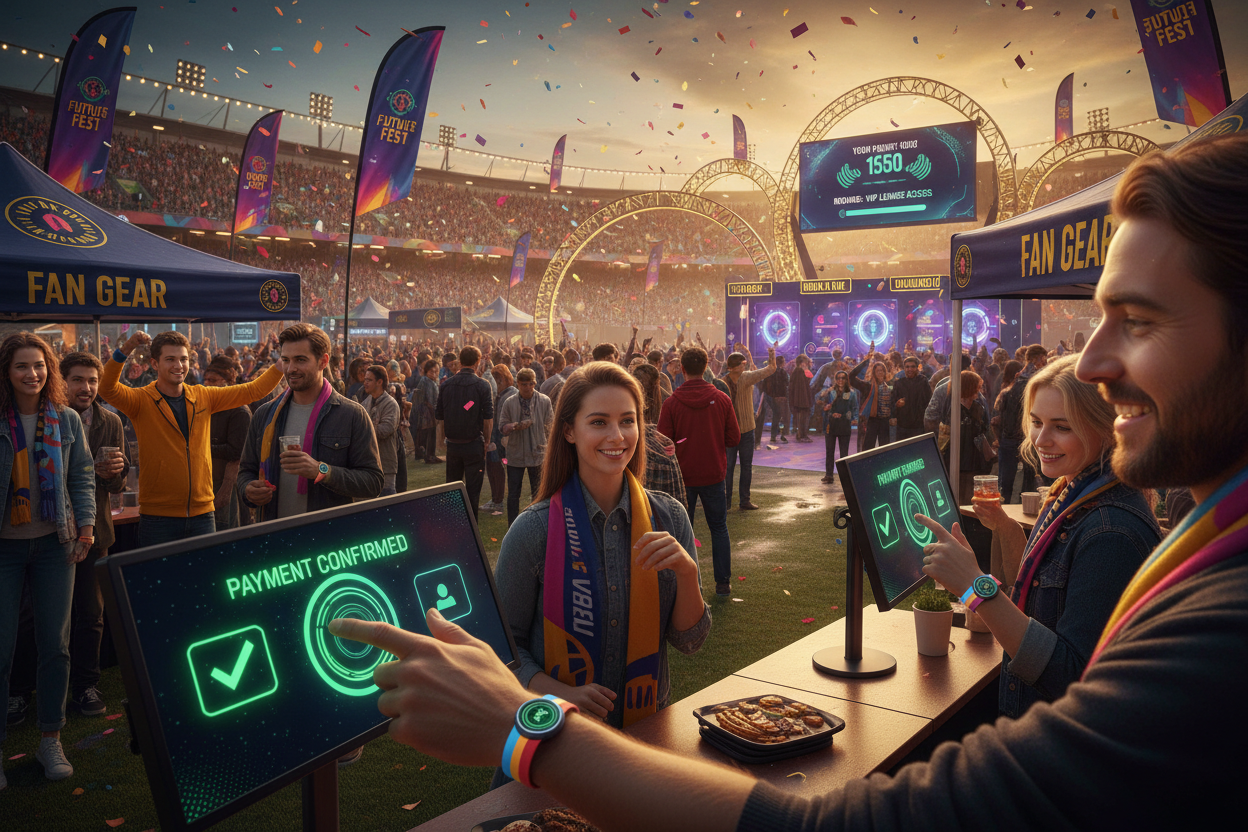
Cashless payments
Membership identification
Brand activation activities
For attendees, the technology often becomes invisible.
Instead of pulling out tickets or scanning QR codes repeatedly, participants simply tap or walk through designated checkpoints.
The Future Is Integrated Event Technology
RFID is unlikely to replace every other technology.
Instead, it is becoming part of a broader digital ecosystem that includes mobile ticketing, NFC, BLE, cloud analytics, and real-time operational dashboards.
For organizers, the question is no longer whether RFID works.
The real question is how RFID can be integrated into a larger strategy that improves efficiency, enhances attendee satisfaction, and delivers measurable operational value.
Q: How much extra does an RFID solution cost for a 20,000-runner marathon?
A: Less than $2 per runner. Compare that to the labor cost of manual timers and the brand value from happy runners – it’s highly cost-effective.